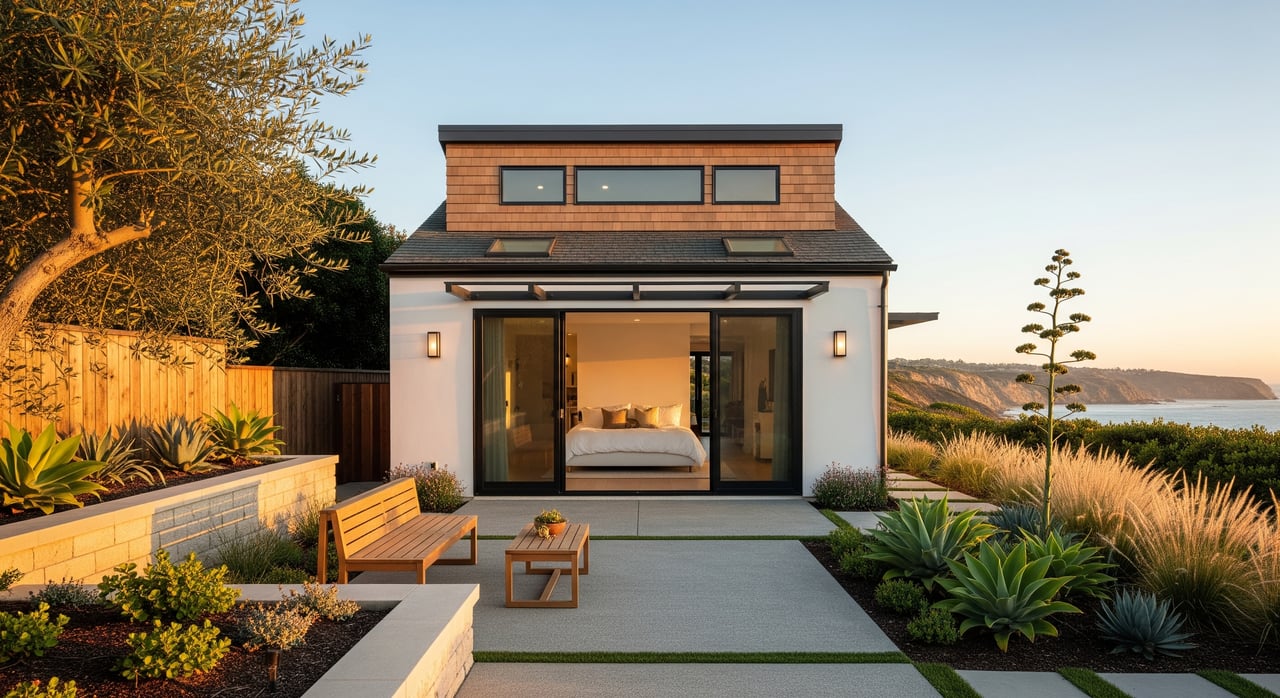
Thinking about adding a guest house, in‑law suite, or rental on your Cardiff by the Sea property? You’re not alone. With multigenerational living and rental income on the rise, accessory dwelling units can unlock flexibility and long‑term value. In this guide, you’ll learn the Encinitas basics that matter most: size and placement, parking rules, the permitting path, and smart planning tips for coastal lots. Let’s dive in.
What an ADU Is in Encinitas
Accessory dwelling units are self‑contained homes on the same lot as your primary residence. In Encinitas, that includes Cardiff by the Sea. State law sets the baseline, and the City of Encinitas applies local standards that must fit within those state limits.
You’ll see two common terms:
- ADU: Can be detached in the backyard, attached to the home, or created by converting existing space like a garage.
- JADU: A junior ADU carved from the existing residence, with a smaller size and simplified kitchen setup.
Local standards must respect state rules on ministerial review, setbacks, parking limits, and many occupancy provisions. The City’s Planning Division is your go‑to for parcel‑specific details.
Size and Layout Options
JADUs: Up to 500 square feet
A junior ADU is created within the walls of your existing home. State law caps JADUs at 500 square feet. They typically include a small kitchen setup and may have specific owner‑occupancy requirements. Always confirm current rules with the City before finalizing your plan.
Detached ADUs: Often up to 1,200 square feet
State law supports larger detached ADUs, and many cities allow up to 1,200 square feet. Encinitas may apply its own maximums within state limits. If your lot size and coverage allow it, a detached cottage is a flexible option for long‑term stays or steady rental income.
Attached or conversion ADUs
Attached ADUs and conversions of existing space can follow different size formulas. These projects can be efficient if your home already has underused areas, like a garage or bonus room. Final square footage will depend on local code and your existing footprint.
Setbacks, Height, and Coastal Factors
Setbacks
State law generally allows reduced side and rear setbacks for ADUs. A typical minimum to expect is about 4 feet for detached units, subject to local application. Confirm how your zoning district, lot shape, and structures affect placement.
Height and lot coverage
Encinitas applies height limits for accessory structures and ADUs, which vary by zoning and whether the unit is one or two stories. Lot coverage and floor‑area ratio can also limit size on smaller parcels. A site plan review early on helps you avoid redesign later.
Coastal Zone considerations
Many Cardiff properties sit in the Coastal Zone, which may trigger a Coastal Development Permit or additional design standards. Coastal context also elevates the importance of setbacks, privacy, and view considerations. Connect with Encinitas Coastal and Planning staff early in the process.
Parking Rules and Exemptions
State rules limit how much parking a city can require for ADUs. Common exemptions include:
- Within one‑half mile of public transit. Properties located within a 0.5‑mile walking distance of a transit stop often qualify for no additional parking.
- Conversion of existing space. Turning a garage or similar area into an ADU typically does not require new parking.
- No replacement parking for a converted garage. Local agencies generally cannot require you to replace those spaces elsewhere on-site.
Cardiff’s proximity to rail and bus routes can make many properties eligible for exemptions. Measure your distance to the nearest stop and verify with Planning.
Utilities and Site Readiness
Most Cardiff homes are on public sewer, but confirm your setup. Properties on septic or private systems require county review, which can affect size and feasibility. Also plan for utility capacity, meter upgrades, and trenching. Early coordination with utility providers and the City’s engineering counter helps you avoid surprises.
Permitting Pathway in Encinitas
Step 1: Pre‑application research
Contact the City of Encinitas Planning and Building teams to confirm zoning, coastal status, sewer availability, and any overlays such as slope or historic areas. Request the City’s ADU handout and checklists to understand submittal requirements.
Step 2: Design and documentation
Prepare a clear site plan showing lot lines, existing structures, proposed ADU location, setbacks, paths of travel, and utility connections. You’ll also submit architectural drawings and structural plans for review.
Step 3: Ministerial review vs discretionary
Most ADUs that meet objective standards receive ministerial approval without a public hearing. If your project needs a variance, Coastal Development Permit, or other discretionary approvals, expect added time and steps. Your pre‑application meeting should flag these triggers.
Step 4: Plan check, fees, and issuance
Your plans typically route through Planning, Building, and possibly Engineering or Public Works. You’ll pay plan check and permit fees, plus any applicable impact or utility fees. The City can share a current fee schedule and how state rules cap certain fees for ADUs.
Step 5: Construction and inspections
Once permitted, your contractor will call for inspections at key milestones. After final sign‑off, you’ll receive a certificate of occupancy and can rent or occupy the unit.
Timeline expectations
For compliant, ministerial ADUs, a common planning estimate is about 60 to 90 days from a complete application to approval, depending on plan check cycles. Projects requiring discretionary permits can take several months to a year.
Practical Cardiff Considerations
Common ADU forms locally
- Garage conversions or units above an existing garage
- Detached backyard cottages, size‑dependent on coverage and setbacks
- Interior conversions that repurpose underused space
Design and neighbor relations
Coastal character matters in Cardiff. Thoughtful design choices on materials, rooflines, window placement, and landscaping can improve privacy and reduce sound. A friendly head‑up to neighbors about construction timing and screening plans helps set the tone.
Owner‑occupancy and rental strategy
State rules have relaxed many owner‑occupancy requirements, especially for standard ADUs. JADUs may still carry specific occupancy rules. If you are aiming for rental income, also review local rules on short‑term rentals before you plan on frequent turnovers.
HOAs and CC&Rs
If your property is in an HOA, review CC&Rs early. Private restrictions still apply, though state law limits how far an HOA can go in frustrating ADU compliance. Coordinate with your board to streamline approvals.
Costs and financing
Conversions generally cost less than ground‑up detached units. Coastal construction, utility upgrades, and foundation work can add to budgets. Many owners use cash, home equity, construction loans, or remodel loans. Get two or three estimates from qualified pros before you lock the scope.
Insurance and management
Update your insurance to reflect the added unit and landlord exposure if you rent it. If you plan to lease the ADU, follow local landlord‑tenant laws and disclosure requirements. Consider whether you’ll self‑manage or hire a property manager.
Environmental and resiliency
Coastal properties should account for flood zones and sea‑level rise risk in siting and design. Energy‑efficient systems and water‑saving fixtures help with operating costs and compliance with green building standards.
Quick Prep Checklist
- Confirm zoning, Coastal Zone status, and any overlays with Encinitas Planning.
- Verify sewer vs septic; if septic, contact county environmental health early.
- Request the City’s ADU handout, checklists, and fee schedule.
- Map the nearest transit stops and measure your 0.5‑mile walking distance for parking exemptions.
- Review CC&Rs or HOA rules and talk to your board.
- Get preliminary contractor and architect estimates for your preferred ADU type.
- Schedule a pre‑application meeting to identify any discretionary triggers.
Start With a Plan
An ADU can support family, boost property utility, and, if allowed by local rules, add rental income. Your best first step is a clear site plan matched to Encinitas standards, with early conversations at the City counter. If you want a seasoned local perspective on value, rental positioning, and resale appeal, connect with Kristi Smith for a neighborhood‑informed strategy.
FAQs
How big can an ADU be in Cardiff?
- State law supports common upper limits such as 500 square feet for a JADU and up to about 1,200 square feet for many detached ADUs, but Encinitas sets the specific local limits for your parcel.
Do I have to add parking for an ADU?
- Often no; many ADUs are exempt if you are within 0.5 miles of public transit or converting existing space like a garage, but verify your property’s status with Encinitas Planning.
Will a Coastal Development Permit be required?
- If your Cardiff property is in the Coastal Zone, a Coastal Development Permit or coastal design standards may apply, so check with the City early.
How long does ADU permitting take in Encinitas?
- Ministerial ADUs that meet objective standards often move from a complete application to approval in about 60 to 90 days, while discretionary projects can take several months or longer.
Can my HOA stop me from building an ADU?
- HOAs and CC&Rs can set some rules, but state ADU law limits unreasonable barriers; review your CC&Rs and coordinate with the HOA as you plan.